
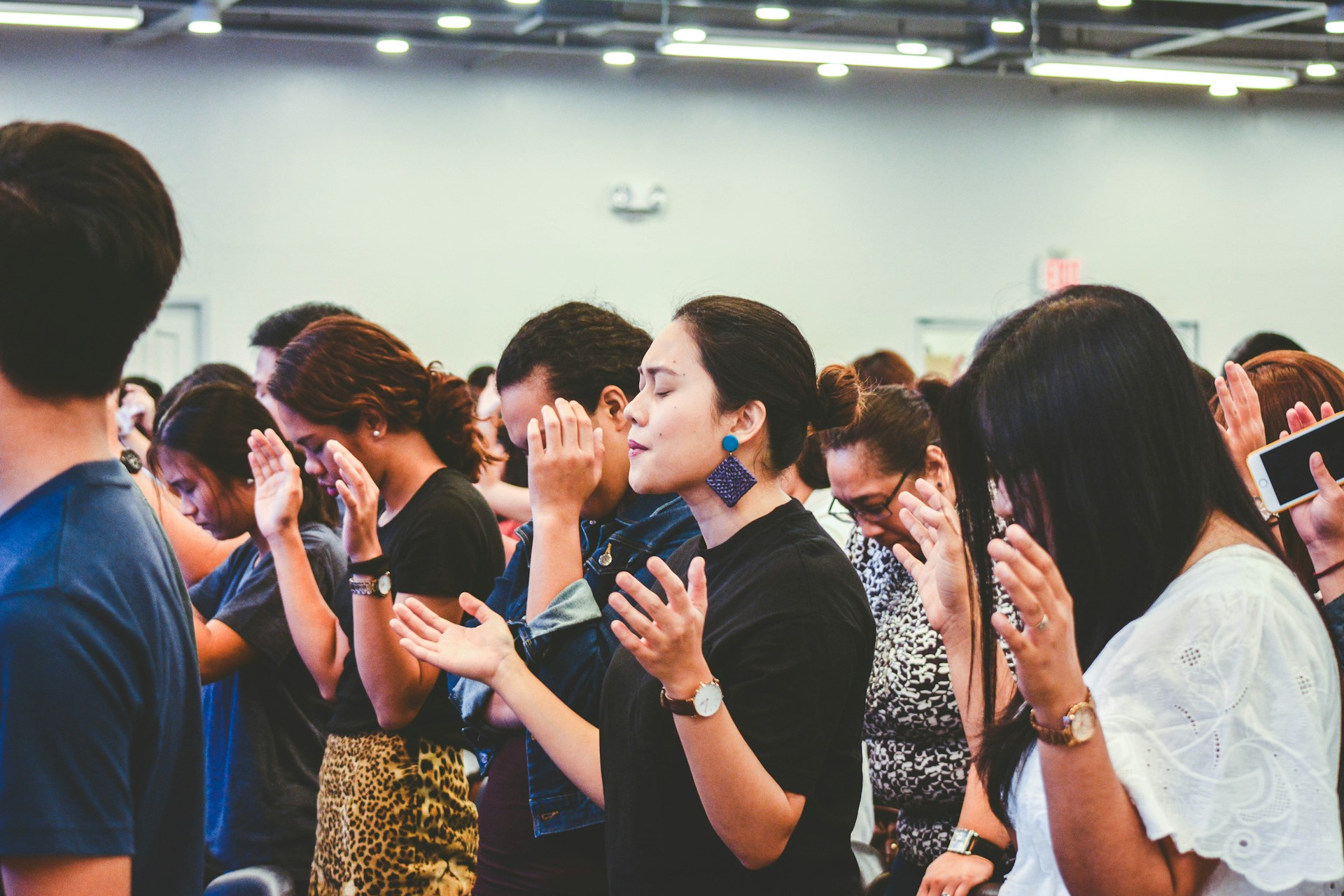
Does God hear everyone’s prayers? In this episode, we explore what Scripture really teaches about righteousness, salvation, and effective prayer, unpacking what it means to be “righteous” not by works, but by faith in Christ (Philippians 3:9). Phylicia addresses hard questions like: Does God hear unrighteous or prideful prayers? What about the prayers of unbelievers? And do more prayers really equal more power? If you’ve ever wondered whether God hears your prayers, how humility matters, or how faith and fervency work together, this biblical teaching will bring clarity, encouragement, and gospel-centered hope.
Revival in New York Article: https://www.cslewisinstitute.org/reso…
Shop Prayer Resources Every Woman a Theologian Shop: https://phyliciamasonheimer.com
Spring Shop launches March 12 with new prayer-focused resources and more.
Watch the full Verity Podcast Prayer Series:  / @veritypodcast
Subscribe to Verity Podcast: https://apple.co/veritypodcast
Verity Podcast is an Every Woman a Theologian company. We believe every woman should be a theologian—every woman a student of the heart of God.
Order Every Woman a Theologian: https://tsfqr.com/EWATbook New Release: Who Is Like Our God? Amos & Micah Bible Study https://tsfqr.com/Amos
Follow along: Substack: https://phyliciamasonheimer.substack.com
Instagram:  / phyliciamasonheimer
EWAT Instagram: / everywomanatheologian
Watch Now
Transcription
It’s not about finding the right person who’s more righteous. It’s not about finding the person who can say the right words. It’s about a heart attitude that is fervent for the things God is fervent for. And the prayer is effective because of Christ’s righteousness given to us. Welcome back to Verity Podcast, friends. I’m Phylicia Masonheimer, your host and the founder of Every Woman a Theologian. We are in the middle of our prayer series, and this is episode 6 of that series where we are talking about a question that y’all sent in that is connected to quite a few different scriptures that we’re going to look at in this episode. And that question is, does God hear everyone’s prayers? Now, I had 3 different titles for this episode, all based on the different passages that we’re going to be looking at today.
I thought about calling it, “Does God hear the prayers of unbelievers?” I thought about calling it, “Does God hear the prayers of the unrepentant?” or “Does God hear my prayers when I’m sinning?” I also thought, “Should I talk about, you know, the righteous and effectual prayer from James 5?” Guess what? We’re going to cover all of these things. We’re just going to title this episode, “Does God Hear Everyone’s Prayers?” That should cover all of the people that we’re talking about in this episode. This came up because when we were collecting the questions from you via our email inbox, which by the way, you can still send us questions during this prayer series, you can email them to phylicia@phyliciamasonheimer.com, our team will receive it, we go through those emails every week. When we were looking through those questions, what we saw was a consistent insecurity around whether or not God heard our prayers based on a few different factors. One, being righteous enough, based on what we see in James 5:16. Two, being sinless enough. So kind of like the flip side of that, like, am I righteous enough? Like, am I good enough? But also, am I too bad? Like, am I too bad for God to hear me? Looking also at verses like 1 Peter 3:7, where it says that a man who does not love his wife will have his prayers hindered. So the question then is, okay, well, what can I do to have my prayers hindered? I might not be a husband, but doesn’t that mean that my sin can hinder my prayers? What does that look like? And then the question, does God hear the prayers of unbelievers? So people who don’t follow him and cry out to him, maybe in a moment of desperation, is God hearing their prayers if they’re not his children? If they’re technically in sin, they’re not in Christ.
So we’re going to talk about all of that in this episode, and I realize that it’s a lot to cover, so we’re kind of doing a light touch on these. I always encourage you to go look at these scriptures, look at these passages yourself, because this is mainly to just kind of whet your whistle, as we say here in the Midwest, um, get you interested in digging deeper into these topics. Now, before I jump in and look at these, I just told you you could dig deeper, so I want to show you a few books that I really like on this. One of my favorite books on prayer is Richard Foster’s book Prayer: Finding the Heart’s True Home. And what I love about this book is that it goes through all the different types of prayer. So he divides it up into 3 sections: moving inward, moving upward, and moving outward, and the different kinds of prayer that you participate in, in those particular practices of prayer. Another one is, and I read from this in a previous episode, “With Christ in the School of Prayer” by Andrew Murray. This is actually a modernized version in modern English.
I have both his original version and this version. Both are excellent. This is a newer book by Chad Bird, and you might be familiar with Chad Bird because he spoke at our virtual Verity Conference last year, so in 2025. I wanted to have him speak in person at Verity Conference 2026 here in northern Michigan, Traverse City, Michigan. Unfortunately, he was already booked for the weekend, but we’ll try again in the future. This is his book, Untamed Prayers, and it’s 365 daily devotions on Christ in the Book of Psalms. So I love this book, and that one is really new. This is an older one.
This one is called Lord Teach Me to Pray in 28 Days by Kay Arthur. If you’re familiar with Precept Ministries, Kay Arthur is the author behind Precept Ministries studies. So this book is a nice introduction to learning how to pray as well. And I have about a dozen other prayer books I could recommend to you, but I just want to start with those four because I think if you’re wanting to dive more into this topic of prayer and where to go from, from here, you can check out those books. I am making a prayer book list on my Amazon storefront that we will link in the show notes, and that will allow you to check those out there. Or just use my Amazon list as a guide of what you’re looking for, and you can head to christianbook.com or even ThriftBooks to find more affordable or non-Amazon options for buying your books. All right, let’s jump into this topic. Does God hear everyone’s prayers? Well, We have to start with the question of what it means to be righteous.
To answer the question of, does God hear everyone’s prayers, we have to ask, what is righteousness? Because what we’re truly wondering is, do I have to be righteous enough for God to hear me? Does God hear me if I’m not righteous? And why is the prayer of the righteous person, as James 5 says, powerful and effective. So this is the verse, James 5:16. I’m going to pull it up for you here, and it says, therefore confess your sins to one another and pray for one another so that you may be healed. The prayer of a righteous person is very powerful in its effect. Knowing this, many people will seek out individuals who they think are more righteous or closer to God, quote unquote, and ask them to pray on their behalf because they believe that based on James 5 that certain people have more sway with God. And that is not what this verse is saying. So we need to back up from James 5:16 and ask the question, what does it mean to be righteous? What does that look like? And one of the best places to answer that question is in Philippians 3. It says here in Philippians 3:9 that we should be found in him, not having a righteousness of our own that comes from the law, but that which comes through faith in Christ, the righteousness from God that depends on faith.
In the Bible dictionary, righteousness is described as integrity, virtue, purity of life, rightness, correctness of thinking, feeling, and acting. So that’s the biblical definition of righteousness. But here’s the kicker: righteousness is not something that you earn or something that you gain or something that you suddenly are just so great at on your own works. It’s not like, oh, I’m saved by grace and then now it’s all just up to me and I’m out here doing the effort to be righteous and stay righteous. No, Philippians tells us that righteousness is the kind that comes through faith in Christ from God, depending on faith. So he says it like two different ways. He says it’s, it’s righteousness that comes through faith in Christ, and also righteousness that comes from God depending on faith. So two directions he’s saying the same thing, that this righteousness is given to us.
It’s like, picture it like a garment, picture it like a robe that’s being put on you over top of the dirty clothes of your former self, your former life, your sins. He’s taking this garment, Christ’s righteousness, he’s putting it over top of that, or better yet, removing, taking off that old garment, throwing it away, burning it, and putting on the new garment. So what does it mean to be righteous? Well, it means to have integrity, virtue, and purity of life, but that is all given to you by Christ through your faith, through faith and grace working out in love, that it’s given to you. And then we simply walk by faith every day by the power of the Holy Spirit, um, in that righteousness. So when we turn to James 5:16 and it says the prayer of a righteous person is very powerful in its effect, it’s not like, oh, there’s some super holy righteous person that’s just like out here holier than the rest by his own merit. That’s guy you gotta find, and if he prays for you, you’re going to be okay. No, it’s saying a righteous person, a person who is in Christ’s righteousness, who, who is wearing Christ’s righteousness, that person has a powerful and effective prayer. Now, of course, this person has received Christ’s righteousness, also needs to walk in Christ’s righteousness.
They need to persevere in it. Over and over throughout scripture, we see this language of perseverance, that you’re choosing to submit yourself to the identity you received. And if you don’t do that, you’re going to live in this state of anxiety and conflict within yourself because you have an identity and you’re not walking according to it. So obviously, are there people who are more submitted to their righteous identity than others? Absolutely, there, there are. And those people, by the fact that they are walking closer with God, know better what to pray. They are more in tune to God’s will. They are more practiced in prayer. So yes, are they going to be more naturally bent to prayer? Are their prayers going to be more powerful because they are aware of God’s will? I think so.
Yeah, probably. But it’s not because they, in their own merit, got to that place. They simply are abiding with Christ, and the natural product of abiding in Christ is that you grow his fruit. So if you have received the righteous identity, which is available to you in Christ, which, which if you’re a Christian, you’ve got this, you’re wearing the garment. Now you have to abide in that, you have to live in that. And if you do, you will have the prayer of the righteous. Like when you pray, that is the prayer of the righteous, and you will see more and more come out of your prayer life as you are in submission to the Holy Spirit and aware of God’s will. And if you haven’t listened to my episode on God’s will, go back to that episode to understand what does it mean to pray God’s will, because I have a whole episode on that.
So what does this mean here where it says it’s powerful in its effect? Some versions say the fervent and effective prayer of the righteous. Um, the fervent prayer of the righteous is effective. Fervent means very strong, fervent for the things of God. So this person who is praying in James 5 is fervent for the things God is fervent for. They’re not apathetic. They’re not coming to prayer like, well, I’d sure like to be somewhere else right now. And when I was researching this episode, I wanted to just get an idea, historically speaking, what did prayer groups look like in other times? Because I’ll admit to you, like, I have been in some prayer groups, Bible studies, things like that, where I’ve wondered, is anything good coming out of this meeting? Have you been there? I feel a little embarrassed to admit that, or I have been in meetings like that where I’m like, are we— is this— Lord, are you hearing this? We’re praying for Aunt Janet’s ankle, and I just, I’m, you know, to be honest, I’m struggling. So I wanted to know, like, when people talk about revivals being born out of prayer for decades, I’m, I’m wondering, what were they praying for? How were they praying? What did it look like? And I found this article on cslewisinstitute.org.
I’ll link it in the show notes, called Revival Born in a Prayer Meeting. And it’s quite long, um, but it was fascinating. It was talking about a specific revival that was birthed in New York City in the 1850s. So this would’ve been during the Second Great Awakening, so the tail end of the Second Great Awakening. But what was so interesting to me is I expected them to be praying maybe over the nation or over politics. I mean, this is a very pivotal time in the United States. This is right before the Civil War occurred. So that was kind of like where my brain was headed.
But what actually happened in this prayer group was that there was one man who was kind of in charge of it, and he was running it. He’s like in his 40s, and he had opened up this, this like room where people could just come and pray. It was just always open. It was, it was kind of like a 24-hour prayer type thing, but then had specific nights of prayer. And when people would come, it’d just be like 3 or 4 or 6. It was never a lot of people coming to pray, which if any of you have ever been in a prayer chapel regularly, I have over the course of my life at different places that I’ve lived, going regularly to a prayer chapel or to prayer services, they usually are not well attended. They’re generally like smaller events is what I’m trying to say. And this was the case here.
So in this prayer meeting, Um, they were doing something very simple. They’re standing up and reading prayer requests from— that were handed in, and everyone who was in the room would pray over that request together as they were in the room, and then they would stand up and vocalize a request of their own if they had one, and people would pray over that. I don’t know what I was expecting, but this, this was so interesting to me because typically the way I’ve seen prayer done in a prayer group setting like this is, you know, it’s— there’s usually people talking a long kind of background story behind the request and then asking for prayer for the request. And by the time you get to the prayer time, you have like 5 minutes. So you don’t get to actually pray. You’re doing a lot more talking than praying. But in this setting, they were just reading a simple request and then everyone was praying. So the request was actually— there was less speaking in regard to the request and more speaking in regard to the prayer.
Actually, they were praying more than they were talking. And over time, this began to gather more and more people and they were a lot of business owners, people who were coming in to ask for prayer because of the things that were going on in their lives and the difficulty of, you know, what they were going through in this period in American history. And so over time, they saw this little trickle of people become an entire revival, and it said within 6 months, 10,000 businessmen out of a population of 800,000 were gathering daily in New York City for prayer. This is wild. So that’s a little history lesson that I didn’t mean to include. I found it fascinating. But what’s my point here? When we read in James 5:16 that the prayer of the righteous person is powerful and effective, or, you know, the fervent prayer of the righteous person is powerful and effective, I look at an example like this, this revival in New York City, in the 1850s. And what I see is, number one, people who recognize that they were in Christ, they had the authority to pray fervently.
And number two, they were living as if they were in Christ, so they were praying fervently, and they were wearing the righteousness of God, and they were not apathetic about the things of God. So when they’re sitting in there and they hear someone say, please pray for my wife and child, They’re giving all their effort in that moment to praying for that wife and child as if it were their own. And I think that’s what James 5 is talking about. It’s not about finding the right person who’s more righteous. It’s not about finding the person who can say the right words. It’s about a heart attitude that is fervent for the things God is fervent for. In the prayer is effective because of our righteousness, because of Christ’s righteousness given to us. So prayer that is continued and persevering, not giving up, and aligned with God’s will is going to be effective prayer.
Now, just like I talked about in the episode about God not answering prayers, I said you might not always see the answer on your time, or the answer might be no or wait., and it’s God saying, I’m with you. Oswald Chambers says this, that God trusts you with his silence, and that it’s really a privilege to be entrusted with God’s silence because it means that he knows that you’re going to walk with him through that silence. That blew my mind the first time I read that. So this kind of prayer, the prayer of the righteous in James 5:16, it’s very strong. It’s aligned with God’s will. It’s not apathetic. It’s continued persevering, and it’s not giving up. That’s what that looks like.
So what’s the basis for righteous prayer? Like, how can we pray righteously? Well, the basis for this is our union with Christ. Now, if you are Orthodox or you have been exploring Orthodoxy, you might be familiar with this kind of concept. In Orthodoxy, it’s called theosis. In Reformed traditions, it’s often called christosis, or christosis. Um, but it’s basically saying our union with Christ based on the righteousness of God is that we are becoming more and more like Christ every single day. We’re so unified to him, we begin to look like him. 1 Corinthians 15:22, Ephesians 1:7, and Colossians 1 all talk about us being in Christ in this sense. Um, I’m going to pull up Ephesians 1:7 here, it says, in him we have redemption through his blood, the forgiveness of our trespasses according to the riches of his grace.
And that’s just one example. The other two passages also talk about this. So being in Christ means that you are literally unified to Christ. You are, you are in him. And we see this language when it talks about being part of the body of Christ, like we’re, we’re part of the body. We are a foot or a hand or an arm, you know, as a part of the Lord’s body, but all together we become Christ when we’re working together as the church, as Christ’s bride. And Calvin talks about this in his Institutes of the Christian Religion. I’m going to read this to you and then explain what he’s saying.
He says, we do not therefore contemplate Christ outside ourselves, from afar, in order that his righteousness may be imputed to us, but because we put on Christ and are engrafted into his body. In short, because he deigns to make us one with him. So Calvin’s saying here, interestingly, very similar to what we see in Orthodox teaching on the union of Christ, and actually we are one with him. You are one with Christ. So the basis of righteous prayer is your union with Christ. You can pray boldly and authoritatively in God’s will because you are one with Christ. You are in him. And he’s interceding to the Father.
So people who pray powerfully, who are confident to pray, they have a really strong understanding of this, that they’re, they’re unified with him. And therefore everything that they’re asking is in alignment with his heart. In talking about the prayer of the righteous and the basis for righteous prayer, we now have to turn to the reality of unrighteous prayer. And this is where people get spooked. They start thinking, well, I, I have to be more unrighteous than I can even imagine. So that means that I’m, I’m probably, I’m probably too unrighteous to be heard. So let’s look at 1 Peter 3:7. Husbands, in the same way, live with your wives in an understanding way, as with a weaker partner, showing them honor as co-heirs of the grace of life, so that your prayers will not be hindered.
All right, we see that section, so that your prayers will not be hindered, and that’s what gets us scared. We think, oh my goodness, well, now my prayers are going to be hindered because how could I possibly be sinless enough for them not to be? Well, remember, our righteousness is through Christ, not through our works. However, as this verse is illustrating, when we are living in rebellion against God, there is an impact on our prayer life. But what is that impact? What could this mean? Well, this particular passage, looking at husbands in a culture where women were treated as a lower status person, or not even a person, you’re seeing Paul or Peter here specifically address Christian husbands and say, look, if you want your prayers to be heard by God, you cannot be praying in a way that exalts you above your wife. I think that this passage is specifically dealing with prideful prayer, which we see in the Gospels when Jesus tells the parable about the prideful prayer of the Pharisee who is praying, saying, “Oh Lord, thank you so much that I’m not like that tax collector over there.” But the tax collector is beating his breast saying, “Lord, have mercy on me.” We’re going to look at that passage in a second. So the first guy, he’s praying out of pride, and I think that’s what Peter’s getting at here. He’s saying, live with your wives in an understanding way, as with a weaker partner, showing them honor as co-heirs of the grace of life. So he’s saying, be understanding, be compassionate, show them honor so that your prayers will not be hindered.
So the opposite of that would be to be a bully. To, to, to be merciless, to be dishonoring to them. And if you’re living in that way, your prayers are hindered because you’re living a double life. You’re not praying things in alignment with God’s will because you won’t even acknowledge the ways you’re not living in God’s will. You’re not hearing God’s voice. And I think this does happen with many different issues, pride being one of them, but it can happen in any area where I’m living one way in my life and I’m so blind to it. I refuse to acknowledge what God’s trying to teach me or submit to his word in this area, but I have a lot to say over here in this other area. And I’m praying that God would work his justice and work his truth over these things I’m passionate about, but I’ve tried to not tell my left hand what my right hand’s doing in a really bad way.
I’m trying to just live a double-minded life, and you can’t do that. So your prayers are hindered because you are trying to live with a foot in two different worlds. And until you bring your whole self in submission to Christ—your whole body, soul, spirit—you’re not going to be praying in alignment with God’s will. So if you’re living in a dishonoring way towards your spouse—this would go for wives towards husbands too—, then you’re most likely missing something as well in your prayers, and that’s going to hinder your intimacy with God. So being out of submission to God will hinder your prayers to God. That, I think, is the message of 1 Peter 3:7. So knowing this, knowing that the issue in 1 Peter 3:7, that unrighteous prayer, is being out of step with God, not in submission to him. Well, here’s the natural next question: does God hear the prayers of unbelievers, people who are, are not in submission to him, who aren’t walking with God? So let’s look at Luke 18:9-14.
This is the parable I mentioned earlier of the Pharisee and the tax collector. Here’s what it says. He also told this parable to some who trusted in themselves that they were righteous and looked down on everyone else. Two men went up to the temple to pray, one a Pharisee, the other a tax collector. The Pharisee was standing and praying like this about himself: God, I thank you that I’m not like other people, greedy, unrighteous, adulterers, even like this tax collector. I fast twice a week. I give a tenth of everything I get. But the tax collector, standing far off, would not even raise his eyes to heaven, but kept striking his chest and saying, ‘God, have mercy on me, a sinner.’ I tell you, this one went down to his house justified rather than the other, because everyone who exalts himself will be humbled, but the one who humbles himself will be exalted.
So in this passage, what I see is the tax collector who, at the time that Jesus was giving this parable, was like saying that the local embezzler, local embezzler, And your local pastor went to pray, and the pastor prays from this place of self-sufficiency and framing it as like a grace, like the grace of God that I’ve been preserved from all of these sins, and I’m so much better, you know, from everyone else. And look at these great things I do, like fasting and giving a tenth. Lord, I’ve done these things for you. Bless me for all the things that I’ve done. But the tax collector is standing there from a place of humility saying, “Lord, have mercy on me.” And based on this parable, I think we can unequivocally answer, “Does God hear the prayers of unbelievers?” with, “Yes, he absolutely does.” Now, I have more reasons why I believe that, but in this passage, the tax collector is the one who is outside the covenant people of God, and he’s partnering with Rome, so he’s collecting taxes for Rome. He’s seen as a criminal, he’s seen as an outsider, he’s seen as someone who’s not a part of the covenant people, and he’s the one who God hears. My second reason that I would say God hears the prayers of unbelievers is that the first prayer we ever pray to God, the prayer to respond to his call, to respond to his grace, is the prayer of an unbeliever becoming a believer. So absolutely, God hears the prayers of unbelievers.
I also believe he responds to people based on their receptiveness. Like, he knows what’s going on in their hearts, and he is working in their lives, calling to all people. Long before they ever respond to that call and respond to his grace. So, we have a God who is mercifully waiting and watching and working for us to call upon his name. So, does God hear unbelievers? I absolutely think so. Now, does he hear arrogant prayers, manifestations? No. So, anytime you’re praying out of pride, you’re praying out of manipulation, you’re trying to use God as a genie. When people pray that way as unbelievers, I think God, he’s not responding because, again, it’s that posture of humility, the posture that recognizes that he is God, that he’s not to be managed or manipulated or manifested.
He is to be recognized as God, but as a loving God who wants to respond to his children. So God does respond to unbelievers, and I think Luke 18 is one illustration of that, but there are others as well throughout scripture. All right, my last point is going to keep us in Luke 18. We’re actually going to go up a little bit. We’re going to go up to Luke 18:1-8, and we’re going to read this section. This is the parable of the persistent widow, and I want to look at this passage because my final question that’s related to God hearing our prayers is this: do more prayers equal more power? This question comes up because on social media sometimes you’ll see people asking for prayer over a situation, and you might think like the more followers somebody has, the more prayers they get, so therefore wouldn’t that mean that there’s more, you know, more power to be had. But then when somebody who has, you know, a million followers asks for prayer and they are praying and the thing they’re praying for doesn’t happen, it can make people go, well, like, why pray? Like, why should we even bother to pray corporately? Now, this is a huge topic that I can’t adequately cover in one episode, but I want to take a little stab at this. This is personal to me because I’ve watched this happen online a couple times.
There’s one where a couple, their daughter was in an accident, and they asked everyone to pray, and their daughter survived, but she is severely impaired by that accident. And so the question that people observing asked in the wake of that was like, “Well, did God actually answer your prayer?” or not, because your daughter has been injured and impaired for the rest of her life. Another example was very recently, I was following a family whose 6-year-old came down with pneumonia, healthy 6-year-old, and passed away. Before their son passed away, they were praying and begging people to pray. There were millions of people praying for this family. And the child passed away. So the question that comes up is, you know, everyone was praying. Righteous people were praying.
They were praying in God’s will. They were praying for healing. They were praying in confidence. They were praying in faith. So why? Why? And this is kind of addressed in my episode on why God doesn’t answer prayer, so please go back and listen to that. But I think what’s really tough to understand in a broken world is how God sometimes answers prayers with no or not yet because of the greater grace that he wants to work in that situation. And I’ve talked about my testimony before, our secondary infertility, our miscarriages, but when we were walking in that season and we asked for the life of our of our miscarried babies, we had many people praying, righteous people, people whose prayers are powerful and effective, and the answer was no. And we still do not know why.
And as I’ve shared on previous episodes, my daughter, Oliveira, would not exist if my previous babies had not passed away. And I don’t understand that. There were many people praying for those babies. And then during my pregnancy with Oliveira, there were many people praying for her life. So what’s the difference? It was sometimes the same people praying for both, but the answer was different in both times. And that’s where, as faithful Christians, we have to walk by faith and not by sight and say, God, there was a reason that I don’t understand right now there was a reason, and I don’t yet see it. I don’t yet understand it, but I trust you. I trust that something, something was done through Josiah and Asher’s lives being lost, and something will be done through Olivera’s life not being lost that I can’t yet understand.
But the corporate prayer of the church mattered in both instances because in the grief of losing our other babies, those prayers of the church, they carried us in ways that I don’t think we fully comprehend this side of heaven. They carried us emotionally and spiritually, and I think that it would have been much harder if we were not being prayed for. I also believe that sometimes in the act of praying, when we’re praying together as a church, the Lord moves in the lives of people who are on the periphery of that situation. And I can say that with confidence. I truly believe that the lives of Josiah and Asher, as short as they were, they brought people back to the Lord. I know this because I’ve read the emails and I’ve seen the messages. They brought people back to the Lord. They brought people to the Lord.
They were a part of bringing people to understand how God is still a loving God in a world full of suffering. And so if that is why God kept them or took them, not took them, but allowed them to pass away and then now has them with him eternally, if that is why that happened, then there is a great grace and a great significance to their lives, a greater significance to their lives. And I think sometimes we don’t get to see that. I got to see some of the impact of their lives. And then on the other hand, Oliveira’s life and being here in this waking world, she’s going to grow up, Lord willing, and she’s going to, I pray, walk with the Lord. And I don’t know how the Lord’s going to use her or my other children. And there’s a faith aspect there that in both situations, there were all of these people praying and supporting us emotionally and spiritually who are involved in the story of faith and in the witness of Christ in that situation, and it’s bringing more people to the Lord. So sometimes the corporate prayers aren’t to get the intended outcome,, but they mobilize a spiritual outcome that we aren’t aware of yet.
God knows, but we don’t know, and that’s the faith part. That’s the part where we trust God’s character, and we trust that even though it’s not the answer we wanted, that something is being done, something eternal, and someday God will turn the tapestry around, and we’ll see the picture that looks like just messed up threads on our side of his work. Andrew Murray says this: Prayer needs both the hidden secrecy in which the soul meets God alone and the public fellowship with those who find their common meeting place in the name of Jesus. Nothing would be more unnatural than for the children in a family to meet with their father separately, but never in the united expression of their desires or their love. I thought that image was so good, that if you have 4 children in a family, it wouldn’t make sense that they only ever meet with their father one-on-one. They will, of course, but it would also make sense that the whole family would be together in communion with their father, getting to know their father as a family. And that’s what corporate prayer is. It is about requests, but it’s also more than that.
It’s about intimacy with one another, and I think this is such an appropriate episode for the season of Lent, which is when I’m recording it, because this is a time of fasting and repentance, and it’s a time of communal prayer and communal coming together for the purpose of worshiping the Lord and looking forward to the resurrection on Easter Sunday. Corporate prayer is not just about trying to get as many voices possible to get God to do something. It’s— it’s corporate prayer is bringing us together in reverence for God’s glory, reverence for God’s will and what he’s going to do, but also God wants to hear from his people, and when we are gathered together and praying together, there is power in that spiritually. We know that prayer is spiritual war. It’s intimacy, and it’s also spiritual war, and so when we’re together, we are in submission to God and his will,, but we’re also participating in God’s will and joining forces with what he’s doing when we pray corporately. All right, friends, I hope that some aspect of this episode was helpful to you and really encouraged you that God is absolutely hearing you. He wants to hear from you, and I also want to hear from you, not in prayer, but about prayer. So if you have any questions or thoughts on an episode, you can email us at phylicia@phyliciamasonheimer.com.
If you’re watching on YouTube, you can comment below. I read through all your comments and reply to them personally as much as I can. And then if you would like to check out our resources on prayer, please follow Every Woman a Theologian on Instagram. We have all of our latest products, Bible studies, and resources available there. You can also follow me on my website, phyliciamasonheimer.com. We have a prayer-focused launch coming on March 12th. 12th, 2026. So don’t miss that.
That’s when we are releasing all of our new prayer resources to help you with writing scripture-based prayers, a course on prayer, a mini course on prayer. We have so much coming, so I hope that you’ll check that out, and I will see you next time on Verity Podcast.